
Sweepstakes Slots Online: Best US Platforms 2026
 Available in US
Data-driven picks. No hype. Just honest analysis.

Sweepstakes slots are casino-style slot games played through a dual-currency sweepstakes model — a legal framework that lets players in 40+ US states spin reels, chase jackpots, and redeem virtual currency for real cash, all without a traditional gambling license. Players purchase Gold Coins (a play-money currency), receive bonus Sweeps Coins for free, and those Sweeps Coins can eventually be converted into withdrawable dollars. The result is an experience that looks, feels, and pays out like a regulated online casino — except it operates under promotional sweepstakes law instead of state gaming commissions.
This guide exists because the sweepstakes slot space has become too big, too fast, and too legally contested for surface-level overviews. The industry pulled in over .3 billion in gross revenue in 2025 alone, yet six states moved to ban these platforms that same year. What follows is a data-driven breakdown — every platform recommendation, legal update, and strategic insight backed by verifiable numbers from first-party sources. No affiliate hype. Just the facts, the context behind them, and what they mean for your next session.
US Sweepstakes Slots RTP and Payout Numbers
- The US sweepstakes casino market hit an estimated .6 billion in gross player spending in 2024, with operator net revenue of .4 billion — larger than regulated iGaming by roughly 42%.
- Six states banned sweepstakes platforms in 2025; Indiana follows in July 2026. Over 100 class-action lawsuits and 100+ cease-and-desist orders were filed against operators last year alone.
- Sweeps Coins redeem at approximately each, but 67% of paying players buy Gold Coins specifically to obtain SC — making the "free promotional game" framing a legal fiction for most users.
- Sweepstakes casinos pay zero state gaming taxes and are not subject to independent game auditing, self-exclusion registries, or state-level consumer protections available at regulated online casinos.
- If you play, set hard spending limits, complete KYC early, and treat every Gold Coin purchase as a real-money gambling decision — because that's what 90% of players already recognize it to be.
What Are Sweepstakes Slots and Why Are They Everywhere
Strip away the marketing language and sweepstakes slots are straightforward: they are digital slot machines — complete with spinning reels, paylines, bonus rounds, and progressive jackpots — wrapped inside a promotional sweepstakes framework. The legal distinction hinges on three words: "no purchase necessary." Because players can theoretically obtain Sweeps Coins without spending money (through mail-in entries, social media giveaways, or daily login bonuses), the entire operation sidesteps most state gambling statutes. In practice, the overwhelming majority of players spend real money. But legally, what they're buying is Gold Coins — a non-redeemable play currency. The Sweeps Coins come as a "free bonus."
Gold Coins (GC) — Virtual play-money purchased with real dollars. Cannot be redeemed for cash. Used for entertainment-only gameplay.
Sweeps Coins (SC) — Promotional currency received for free alongside GC purchases, through AMOE (Alternative Method of Entry), or daily bonuses. Can be redeemed for real cash prizes after meeting playthrough requirements.
AMOE — Alternative Method of Entry. A free way to obtain Sweeps Coins without purchasing anything, typically by mailing a handwritten request or using a no-purchase entry form. Required by sweepstakes law to maintain the "no purchase necessary" premise.
That framework has created one of the fastest-growing segments in American gaming. According to a 2025 survey by the American Gaming Association, 90% of sweepstakes casino users consider their activity to be gambling — not a free promotional game. Nearly 68% say they play specifically to win real money. The industry's own customers, in other words, see through the legal fiction even if the law hasn't fully caught up.
The demographic profile of sweepstakes players undercuts the notion that this is a niche product for hardcore gamblers. AGA research via CasinoBeats shows that roughly 35% of players fall in the 31–40 age bracket, with 27% aged 41–50. The gender split is nearly even — 51% male, 49% female — making sweepstakes slots one of the most balanced gaming products by gender. About 42% of players earn less than ,000 annually, and 38% have no education beyond high school. This isn't a tech-savvy niche. It's a mass-market product reaching middle-income Americans across dozens of states.
Half of all online casino advertising seen by US consumers in early 2025 came from sweepstakes operators — not regulated casinos. According to Sensor Tower data cited by the AGA, sweepstakes platforms accounted for approximately 50% of real-money casino ad impressions, outspending the licensed industry in digital marketing despite operating without gaming licenses.
"Consumers see right through the 'sweepstakes' casino facade and they're calling it what it is: gambling," said Tres York, Vice President of Government Relations at the American Gaming Association, in a July 2025 statement. That bluntness reflects a growing consensus among regulators, researchers, and — perhaps most critically — the players themselves. The gap between the legal label and lived experience has become untenable in several states, and the data supports York's assessment.
Part of what fuels the expansion is the economic engine behind it. The sweepstakes industry generates an estimated .468 billion in annual vendor spending — covering payment processors, cloud infrastructure, marketing agencies, and game developers — and supports roughly 2,762 jobs nationwide, according to a 2025 economic impact report prepared by Eilers & Krejcik Gaming for the Social Gaming Leadership Alliance. Those numbers matter because they represent the lobbying ammunition operators use when state legislatures consider bans. It's not just about the players; there's a supply chain defending the model's survival.
.468 billion in annual vendor spending and 2,762 jobs supported by the US sweepstakes casino industry (EKG/SGLA, 2025).

So why are sweepstakes slots everywhere? Because the model found a legal gray area wide enough to build a multi-billion-dollar industry inside it, targeting states where regulated online casinos don't yet exist. In a country where only seven states have legalized real-money iGaming, sweepstakes platforms filled the vacuum — offering casino experiences to the other 43 states through a framework that, until recently, nobody had bothered to challenge. That's changing fast, as the legal section of this guide will make clear. But the product itself isn't going anywhere soon.
How the Sweepstakes Model Actually Works
The sweepstakes casino model is built on a transaction that sounds simple and is designed to be legally bulletproof — or at least legally ambiguous enough that courts haven't reached a consensus. Here's the flow: a player visits a sweepstakes casino site, creates an account, and "purchases" a package of Gold Coins. That purchase — say, .99 for 10,000 Gold Coins — comes with a bonus allocation of Sweeps Coins, perhaps 10 SC. The Gold Coins have no cash value and exist purely for entertainment play. The Sweeps Coins, received "for free" as a promotional add-on, can be wagered on casino-style games and eventually redeemed for real cash prizes, typically at a rate of 1 SC = USD.
The legal alchemy here is the claim that nobody is gambling. The player purchased a virtual product (Gold Coins). The Sweeps Coins were a promotional giveaway. The cash redemption is a sweepstakes prize, not a gambling payout. And because an Alternative Method of Entry exists — usually a mail-in request or online form that provides Sweeps Coins without any purchase — the promotion satisfies the "no purchase necessary" requirement embedded in US sweepstakes law.
The scale of money flowing through this framework tells a different story. According to KPMG's Sweepstakes Gaming Primer, which drew on data from Eilers & Krejcik Gaming, US players spent between .5 billion and .6 billion on Gold Coin purchases in 2024 alone. After Sweeps Coin payouts, the net gaming revenue for operators was approximately .4 billion. These are not the numbers of a promotional giveaway. They are the numbers of a full-scale gambling industry that happens to file its paperwork under a different legal heading.
Only 12% of sweepstakes casino users ever make their first purchase, compared to 51% of players at regulated real-money casinos. Yet sweepstakes platforms grow their audience 16% month-over-month versus just 5% for traditional iGaming, according to an Optimove analysis of 67,000+ players from July–December 2024. The model depends on massive top-of-funnel volume to offset its low conversion rate — a strategy borrowed from free-to-play mobile gaming, not from the casino floor.
"This entire business model is essentially a too-clever-by-half attempt to offer online casino gateways to the public," said Tres York of the AGA at a G2E panel in October 2025, as reported by iGaming Business. "The so-called sweepstakes model that runs all of the time isn't like any traditional sweepstakes model I've ever heard of." York's critique highlights the central tension: traditional sweepstakes — think McDonald's Monopoly or Publishers Clearing House — are time-limited promotions. Sweepstakes casinos operate 24/7, 365 days a year, with continuous play, unlimited purchases, and real-money redemptions. The promotional label stretches thin under that kind of usage pattern.
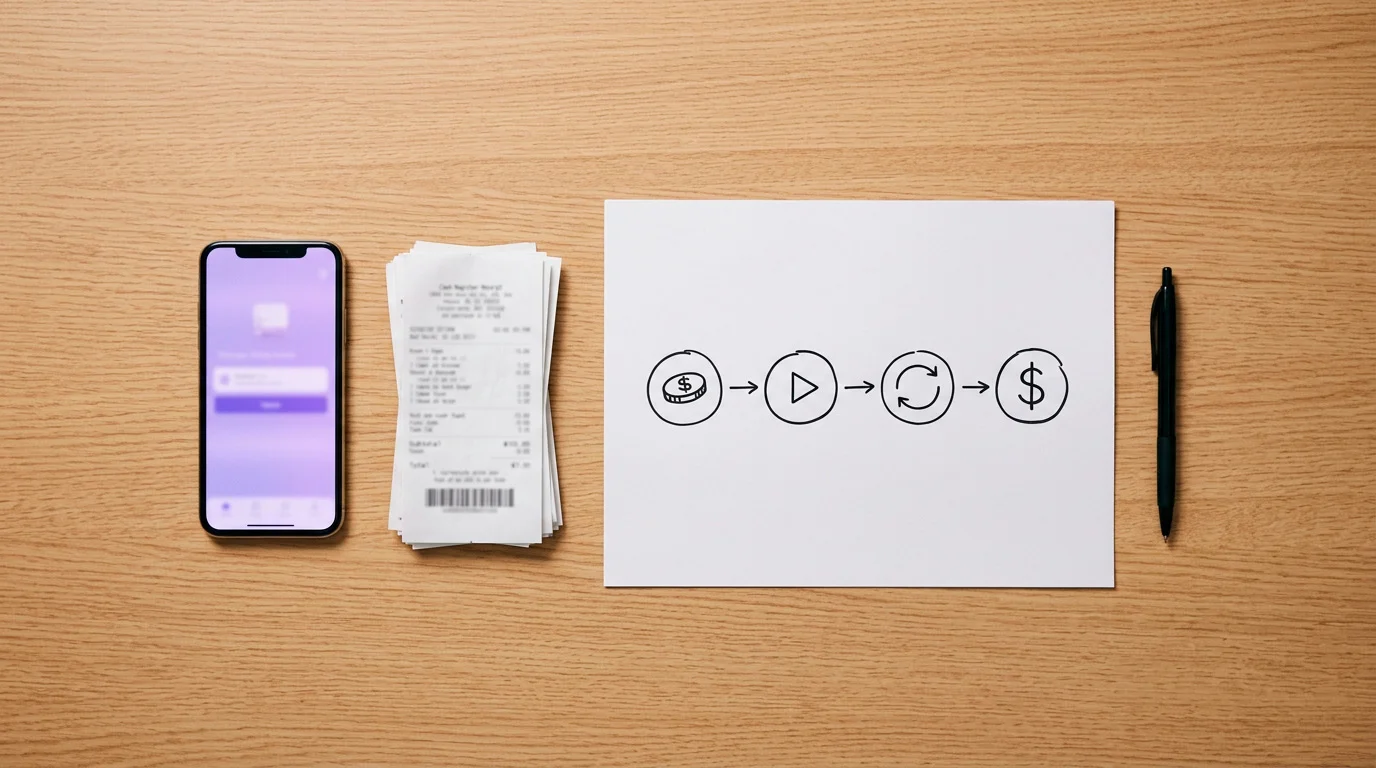
The purchase-to-play-to-redeem cycle works identically on every major platform, though the packaging varies. Some operators bundle Sweeps Coins at a 1:1 ratio with Gold Coin purchases; others use complex tiered packages where buying more Gold Coins yields proportionally more SC. First-time buyers often see inflated bonuses — "Get 1,000,000 GC + 30 SC for .99!" — designed to create an impression of value while obscuring the actual cost of each Sweeps Coin. Once the SC is in a player's account, it's wagered on slot games with stated Return to Player (RTP) percentages, typically ranging from 92% to 97% per game. After meeting the platform's playthrough requirement, remaining SC can be redeemed for cash.
What makes the model commercially viable isn't the individual transaction — it's the aggregate. Millions of players making small purchases, combined with a payout ratio that keeps roughly 28–32% of gross revenue in operator hands, creates an industry that has outgrown the legal category it claims to occupy. Whether that category holds up in court is no longer a hypothetical question. But before getting to the legal battle, understanding the two currencies at the center of every transaction is essential.
Gold Coins vs Sweeps Coins — The Currency That Matters
Every sweepstakes casino runs on two currencies, and understanding the distinction between them is the single most important thing a new player can learn. Gold Coins are what you buy. Sweeps Coins are what you want. Confuse the two, and you'll either waste money on entertainment-only play or misunderstand what's actually at stake when you spin.
| Feature | Gold Coins (GC) | Sweeps Coins (SC) |
|---|---|---|
| Acquired by | Direct purchase with USD | Free bonus with GC purchase, AMOE, daily login, social media promos |
| Cash value | None — entertainment only | Redeemable at ~ per SC after playthrough |
| Legal classification | Virtual good / digital product | Promotional sweepstakes prize |
| Gameplay | Same slots, same mechanics | Same slots, same mechanics |
| Can be purchased directly | Yes | No — only received as bonus or via AMOE |
| Playthrough to withdraw | N/A — no withdrawal possible | Typically 1x, some platforms require higher |
The table above makes it look clean and symmetrical, but actual player behavior tells a more complicated story. An AGA survey covered by SCCG Management found that 80% of sweepstakes users spend money every month, with nearly half spending weekly. More revealing: 67% of those who spend money do so specifically to obtain Sweeps Coins — not because they care about Gold Coins for their entertainment value. The "free bonus" framing collapses when two-thirds of paying customers are transparently buying access to the redeemable currency.
What the data actually shows: The majority of sweepstakes casino revenue comes from players spending money specifically to get Sweeps Coins, which they intend to redeem for cash. The "free-to-play" narrative applies to a minority of users. If you're buying Gold Coins, you're almost certainly doing it for the SC bonus — and that's a real-money gambling decision, regardless of what the terms of service call it.
Gold Coins do serve one legitimate purpose beyond legal cover: they let new players explore a platform's slot library without risking anything redeemable. Most casinos give away a chunk of GC at signup — sometimes millions of them — and playing in GC mode is a low-pressure way to test game mechanics, bonus features, and interface quality. Some platforms also run GC-only promotions and leaderboards, giving the entertainment currency a social function. But make no mistake: GC mode is the lobby. SC mode is where the action is, and operators know it.
The conversion rate between GC purchased and SC received varies dramatically between platforms and even between package tiers on the same platform. A .99 starter package might deliver 30 SC (effectively 17 per SC), while a .99 premium package could yield 350 SC (.29 per SC). This pricing inconsistency is deliberate — small packages subsidize trial, larger ones optimize revenue. Players who treat SC as a fixed-value currency without comparing package efficiency are leaving money on the table before they've placed a single bet.
The critical takeaway: Gold Coins are the legal wrapper. Sweeps Coins are the economic reality. Every decision about where to play, how much to spend, and when to stop should be made through the lens of your Sweeps Coin balance and its real-dollar equivalent — not the pile of Gold Coins gathering digital dust in the other tab.
Legal Landscape in 2026 — Bans, Lawsuits, and What's Left
The legal framework that allowed sweepstakes casinos to operate largely unchallenged for years has fractured. In 2025, six US states enacted explicit legislative bans targeting these platforms. In 2026, the wave continues. What was once a regulatory gray area has become a patchwork of outright prohibitions, active litigation, and uneasy tolerance — and the map is still shifting.
The timeline matters. According to Gambling Insider's January 2026 report, the following states passed sweepstakes casino bans during 2025: Montana (May), Connecticut (summer), New Jersey (summer), Nevada (enforcement expansion), New York (December), and California (AB 831, signed October 11, effective January 1, 2026). Indiana became the first state to act in 2026, with HB 1052 advancing through both chambers and awaiting the governor's signature for a July 1 effective date.
States with active sweepstakes casino bans as of March 2026: Washington, Idaho, Montana, Nevada, Connecticut, New Jersey, New York, California. Indiana's ban takes effect July 1, 2026. Additional states including Michigan have existing restrictions that effectively prohibit these platforms. Players in these states should assume sweepstakes casinos are unavailable or operating in violation of state law.

The California ban deserves its own paragraph because it reshaped the industry's economics overnight. California represented 17.3% of all sweepstakes sales in 2025 — roughly 0.5 million in gross gaming revenue, according to Eilers & Krejcik Gaming data. AB 831 passed unanimously: 36-0 in the Senate, 63-0 in the Assembly. Not a single legislator voted to preserve the sweepstakes model's access to the nation's largest state market. That unanimity sent a signal louder than the ban itself.
"[Sweepstakes] couldn't get one vote in California. You know how hard that is? They can't agree on the colour of the carpet," said Shawn Fluharty, West Virginia Delegate and President of the National Council of Legislators from Gaming States, at a G2E panel in October 2025. Fluharty's quip captures the bipartisan nature of the backlash — this isn't a left-right issue but a consumer protection consensus that crosses party lines.
Indiana's HB 1052 adds enforcement teeth that earlier bans lacked. The bill imposes fines up to 0,000 per violation and passed with decisive margins: 87-11 in the House, 37-8 in the Senate. It specifically targets the sweepstakes casino model by defining the prohibited activity in terms of the dual-currency framework, making it harder for operators to rebrand and re-enter under a different legal theory.
Beyond legislative bans, the enforcement landscape has intensified through two parallel channels. First: class-action litigation. Gambling Insider reports that over 100 class-action lawsuits were filed against sweepstakes operators nationwide in 2025. VGW, the parent company of Chumba Casino, faced more than 20 suits alone. Stake.us, McLuck, and several smaller operators have each been named in at least five. The legal theory in most cases: players were engaged in illegal gambling, not a legitimate sweepstakes promotion, and are entitled to recovery of their losses.
Second: cease-and-desist orders. According to iGaming Business's 2025 year-in-review, states issued more than 100 cease-and-desist letters to sweepstakes operators. Illinois led with over 65 notices, followed by Louisiana with 40+. Arizona, Maryland, and Mississippi also sent enforcement actions. These don't carry the force of a legislative ban, but they signal regulatory intent and create legal risk for operators who continue to accept players from those jurisdictions.
The industry's response has been to organize. The Social and Promotional Games Association (SPGA) has argued that sweepstakes platforms are being unfairly targeted. In a June 2025 statement responding to New York's attorney general, the SPGA declared: "Sweepstakes promotions are not gambling under federal law and are legally permitted in the overwhelming majority of US states." The statement went on to criticize what it called regulatory "overreach" and called for collaborative rulemaking instead of outright bans.
Meanwhile, Los Angeles City Attorney Hydee Feldstein Soto filed what is believed to be the first municipal civil enforcement action against a sweepstakes operator in August 2025, targeting Stake.us. In the filing, reported by iGaming Business, Feldstein Soto described the platform as "a rogue and real money gambling racket with destructive repercussions for its players" — language that signals how seriously some prosecutors are taking the issue.
One data point frames the stakes: AGA research shows that participation in sweepstakes casinos is roughly twice as high in states that haven't banned them compared to states that have. The bans work, at least in terms of access. Whether they push players toward regulated alternatives or unregulated offshore sites is a question no one has convincingly answered yet — and it's the question that will define the next phase of this regulatory battle.
Best Sweepstakes Casinos for Slot Players
Choosing a sweepstakes casino for slots isn't like choosing a regulated online casino, where licensing guarantees a baseline of game fairness, payout standards, and consumer protections. In the sweepstakes space, there's no universal regulator auditing every platform's RTP settings or verifying that advertised games actually deliver their stated odds. That means platform selection matters more here than in any other segment of online gaming. The data-driven picks below focus on metrics that directly affect your experience: game library depth, slot providers on-platform, redemption reliability, SC bonus generosity, and operator track record.
Before the comparison, some context on scale. VGW — the Australian company behind Chumba Casino, LuckyLand Slots, and Global Poker — reported .13 billion in global revenue and 1.6 million in profit for the fiscal year ending June 2025. The previous year: .3 billion revenue, 5 million profit. No other sweepstakes operator comes close to those numbers. VGW's dominance means that Chumba Casino alone likely processes more sweepstakes transactions than the next five competitors combined. Whether that dominance translates to a better player experience is a separate question — VGW is also the operator facing the most class-action lawsuits.
VGW's .13 billion revenue dwarfs every other sweepstakes operator. Chumba Casino is the industry's anchor — but being biggest doesn't mean being best for slot players specifically. Evaluate platforms by their slot library, provider partnerships, and redemption reliability, not by brand recognition alone.
| Platform | Notable Slot Providers | Estimated Slot Count | SC Welcome Bonus | Min. SC Redemption | Redemption Methods | Key Strength |
|---|---|---|---|---|---|---|
| Chumba Casino | VGW proprietary | 150+ | 2 SC free on signup | 100 SC (0) | Bank transfer | Largest user base, established track record |
| Stake.us | Hacksaw, BGaming, Nolimit City | 500+ | 25 SC free + rakeback | 50 SC () | Crypto, bank transfer | Deepest third-party slot library |
| WOW Vegas | Betsoft, BGaming, Relax Gaming | 700+ | 5 SC on signup | 100 SC (0) | Bank transfer, Skrill | Largest total game catalog |
| Pulsz Casino | BGaming, Hacksaw, Relax Gaming | 600+ | 5 SC on signup | 50 SC () | Bank transfer, PayPal | Fast redemption times |
| McLuck | BGaming, 3 Oaks, Spinomenal | 500+ | 7.5 SC on signup | 50 SC () | Bank transfer | Generous daily bonuses |
| High 5 Casino | High 5 Games proprietary | 400+ | 5 SC + 600 Diamonds | 50 SC () | Bank transfer, PayPal | Original game development |
| Fortune Coins | NetGame, BGaming | 300+ | Free SC on registration | 50 SC () | Bank transfer | Low minimum redemptions |
A few observations from the comparison. Chumba Casino's slot library is mostly proprietary — VGW develops games in-house, which means you won't find industry-standard titles from BGaming or Hacksaw there. If your priority is playing specific, well-known slots, Stake.us, WOW Vegas, and Pulsz offer far deeper third-party catalogs. If your priority is platform stability and payout history, Chumba's years of operation (despite the lawsuits) provide a longer track record than newer entrants. Note that the provider landscape shifted in late 2025 when Pragmatic Play exited the US sweepstakes market entirely; platforms that previously relied heavily on Pragmatic titles have since expanded partnerships with other providers.

Redemption minimums matter more than most guides acknowledge. A 100 SC minimum means you need to accumulate at least 0 worth of Sweeps Coins — after playthrough — before you can withdraw. For casual players spending –20 per month, that threshold could take months to reach. Platforms with 50 SC minimums offer a faster path to your first real-money withdrawal. Before committing real money to any platform, check its current terms of service for your state — availability can change without notice.
Top Sweepstakes Slots by Category
Sweepstakes platforms don't all carry the same slot titles, and the games available here differ from regulated online casinos. Several major providers — notably NetEnt, Evolution, and (since September 2025) Pragmatic Play — no longer license their games to US sweepstakes operators. The categories below focus on games actually available at major sweepstakes casinos in 2026.
Highest RTP Slots
RTP — Return to Player — is the percentage of wagered money a slot is designed to pay back over millions of spins. On sweepstakes platforms, published RTPs for individual games typically range from 92% to 97%, though operator-level payout ratios are lower (more on that in the comparison section).
Book of 99 — Relax Gaming | RTP: 99.0% | Medium volatility | Available at: WOW Vegas, Pulsz. The highest published RTP on any sweepstakes platform, with expanding symbols during free spins.
Marching Legions — Relax Gaming | RTP: 98.12% | Medium volatility | Available at: WOW Vegas. Roman-themed with a marching reels mechanic that shifts symbols across the grid each spin.
Best Bonus Feature Slots
Fruit Party — BGaming | RTP: 96.47% | High volatility | Available at: Stake.us, WOW Vegas, Pulsz, McLuck. Cluster-pays mechanic with multiplier symbols and free spins. One of the most popular titles across sweepstakes platforms following Pragmatic Play's exit from the US sweepstakes market in September 2025.
Wanted Dead or a Wild — Hacksaw Gaming | RTP: 96.38% | Extreme volatility | Available at: Stake.us, Pulsz. Duel-at-dawn bonus with sticky wilds and multipliers. High variance means long dry spells punctuated by outsized wins.
Megaways Slots
The Megaways engine — licensed from Big Time Gaming — randomizes symbols per reel per spin, creating up to 117,649 ways to win. Availability on sweepstakes platforms shifted significantly after Pragmatic Play exited the US sweepstakes market in September 2025, removing titles like Big Bass Bonanza Megaways. Remaining Megaways options from providers like BGaming and Relax Gaming are still available on select platforms, though the selection varies by casino.
Jackpot Slots
Progressive jackpots on sweepstakes platforms accumulate in SC rather than dollars. Pool sizes tend to be smaller than multistate regulated progressives because the contributing player base is narrower. Titles from BGaming and Hacksaw Gaming with high-volatility mechanics and large win potential are among the most popular jackpot-adjacent options currently available, though the selection narrowed after Pragmatic Play's withdrawal from sweepstakes platforms.
New Releases Worth Watching
The sweepstakes slot library continues to expand as providers like Hacksaw Gaming, BGaming, and Nolimit City roll out new titles. Pragmatic Play, previously one of the most prolific providers in the space, withdrew from the US sweepstakes market in September 2025 following the Los Angeles civil suit against Stake.us. Recent 2026 additions include Nolimit City releases on Stake.us and new BGaming exclusives on WOW Vegas. Checking a platform's "new games" tab weekly is the most reliable way to catch fresh launches.
Bonuses, Free Coins, and How to Maximize Value
Sweepstakes casinos greet new players with signup bonuses, daily login rewards, social media giveaways, and periodic promotions that can deliver hundreds of free Sweeps Coins. But the structure of these bonuses varies significantly between platforms, and understanding what each type delivers is the difference between playing smart and playing someone else's marketing funnel.
Sign-Up Bonuses
Every major platform offers free Sweeps Coins at registration — no purchase required. Typical values range from 2 SC (Chumba Casino) to 25 SC (Stake.us). Some platforms also offer a first-purchase bonus that doubles or triples the SC allocation on your initial Gold Coin package. This is your lowest-cost way to evaluate a platform before committing real money.
Daily Login Rewards
Most sweepstakes casinos distribute small SC allocations for daily logins, usually 0.3–1 SC per day. Over a month, that's –30 in free play. Some platforms use escalating calendars where consecutive logins unlock progressively larger bonuses.
Mail-In AMOE
AMOE is the sweepstakes industry's legally required free entry method — and its most underused bonus channel. Players can typically request 5 SC per handwritten letter or via an online form where available. The process is deliberately cumbersome, but for patient players it represents a genuine free path to redeemable Sweeps Coins. Check each platform's terms for current AMOE details; rules change frequently.
Social Media and Referral Bonuses
Platforms run giveaways on Facebook, Instagram, X, and Discord ranging from 1–5 SC for small promotions to larger event-based drops. Referral programs typically reward both parties with 10–50 SC after the referred player's first purchase. These channels cost nothing beyond the time to follow and engage.
Maximizing Bonus Value
The strategy is straightforward: claim every free bonus before spending a dollar. Register, collect the signup SC, play through it, evaluate the platform. Use daily login bonuses to extend your free play window. Submit AMOE entries where supported. Only after exhausting free options should you consider purchasing Gold Coins — and when you do, buy during promotional periods when SC-per-dollar ratios peak. The players who extract the most value are those who treat bonuses as a system to optimize, not a gift to accept passively.
From Zero to First Spin — A Step-by-Step Walkthrough
Getting started at a sweepstakes casino takes less time than most people expect. The entire process — from opening the website to placing your first Sweeps Coin wager — can be completed in under ten minutes.
Step 1: Choose a Platform
Start with the comparison table earlier in this guide. Prioritize platforms with slot libraries from providers you recognize, SC redemption minimums you can realistically reach, and no active legal issues in your state.
Step 2: Register and Claim Your Bonus
Registration requires a valid email, name, date of birth, mailing address, and phone number. Most platforms require you to be 18+, though some set the minimum at 21. Use accurate information — you'll need it to match your identity verification later. After registration, your free Sweeps Coins and Gold Coins should appear automatically.
Step 3: Complete KYC Verification Early
Know Your Customer verification is mandatory before your first SC redemption. Requirements typically include a government-issued photo ID and proof of address. Some platforms also require a selfie for facial matching. Complete KYC early — waiting until you want to withdraw creates unnecessary delays.
Step 4: Make Your First Purchase
If you decide to buy Gold Coins, start with the smallest available package. Most platforms accept credit cards, debit cards, and online banking; some also accept cryptocurrency.
According to Optimove research via NEXT.io, 52% of players who make their first purchase do so within 24 hours of registration. After that window, conversion probability drops sharply. This isn't advice to rush — it's a warning that platforms are designed to create urgency. Take your time.
Step 5: Play Your First Slots
Switch to SC mode and select a slot with stated RTP above 95% and moderate volatility. Set a session limit in SC before you start spinning. Track your balance as you play. The goal of your first session isn't to win big — it's to understand how games behave and how quickly SC depletes at your chosen bet size.
Cashing Out — How SC Redemption Works
Redemption is where the sweepstakes model converts from a digital game into a real financial transaction — and it's where many players encounter their first friction. The process isn't complicated, but it has requirements and timelines that aren't always transparent before you reach the withdrawal screen.
Minimum Thresholds and Playthrough
Every platform sets a minimum SC balance for redemption, currently ranging from 50 SC () to 100 SC (0) across major operators. That minimum applies after playthrough requirements are met. The standard across most sweepstakes casinos is 1x playthrough — if you receive 30 SC, you need to wager 30 SC total before those coins become eligible for withdrawal. Some platforms apply higher multiples to promotional SC. Always check the terms attached to each SC allocation.
Verification and Processing Times
First-time redemptions require completed KYC verification. Expect 1–5 business days for initial review. Subsequent redemptions process faster, usually 1–3 business days. Bank transfer (ACH) is the most common method, with some platforms supporting PayPal, Skrill, or cryptocurrency. Crypto redemptions on platforms like Stake.us can settle within hours; bank transfers typically take 3–5 business days after processing.
Common Issues and Tax Implications
The most frequent complaints involve delayed redemptions, additional verification requests after initial KYC, and unexpected playthrough requirements on SC that players believed were cleared. To minimize friction: complete KYC before your first purchase, keep records of your SC balance and wagering history, and read the terms for every bonus you claim. Sweepstakes casinos aren't regulated by state gaming commissions, so there's no external complaint mechanism — persistence with the operator's support team is your primary recourse.
On taxes: the IRS treats sweepstakes winnings as income. Platforms issue a 1099-MISC (not a W-2G) when total redemptions exceed 0 in a calendar year. At redemptions above ,000, operators may withhold 24% for federal taxes. The deductibility of losses remains legally ambiguous because the IRS doesn't formally classify SC wagers as "gambling wagers." Keep detailed records of all purchases and redemptions for tax purposes.
Sweepstakes Slots vs Regulated Online Casinos
Sweepstakes casinos and regulated online casinos serve the same fundamental demand — playing slot machines from a phone or laptop for the chance to win real money. But the similarities end at the screen. Behind the interface, these two models operate under different legal frameworks, different economic structures, and vastly different levels of consumer protection. Treating them as interchangeable is the most expensive mistake a player can make.
Start with the numbers. In 2024, the sweepstakes segment generated an estimated .5 billion in total industry revenue, according to Eilers & Krejcik Gaming data reported by VnExpress. That figure is roughly 42% larger than the entire US regulated iGaming market. For context, the AGA's Commercial Gaming Revenue Tracker puts total US commercial gaming revenue — including land-based casinos, sports betting, and iGaming — at a record .72 billion in 2025, up 9.2% year-over-year for the sixth consecutive annual record. iGaming itself crossed billion in monthly revenue for the first time in December 2025.
.5 billion — estimated sweepstakes industry revenue in 2024, surpassing the US regulated iGaming market by approximately 42% (EKG, 2025).
For 2026, RG.org's analysis projects sweepstakes Gold Coin purchases will reach –13 billion, with operator net revenue between .6 and .2 billion after SC payouts at an average rate of 68–72%. The pessimistic scenario — accounting for accelerating state bans — still projects –11 billion in purchases and .0–3.4 billion net. These are not niche figures. This is a full-scale industry running parallel to the regulated market, serving overlapping audiences, and generating comparable revenue with none of the regulatory infrastructure.
| Metric | Sweepstakes Casinos | Regulated Online Casinos |
|---|---|---|
| Legal basis | Promotional sweepstakes law | State gaming licenses (NJ, MI, PA, WV, CT, DE, RI) |
| Availability | 40+ states | 7 states with full iGaming |
| Regulatory oversight | None — no state gaming commission involvement | Full — state regulators audit games, enforce rules |
| RTP auditing | Not required; operator self-reports | Mandatory; independently tested and certified |
| Consumer protections | Minimal — platform terms of service only | State-enforced dispute resolution, self-exclusion registries |
| Responsible gaming tools | Varies widely; often limited or absent | Mandated: deposit limits, session limits, self-exclusion |
| State gaming tax paid | .09 billion collectively in 2025 | |
| Purchase currency | Gold Coins (indirect); SC for play | Direct USD deposits |
| Minimum age | 18+ (varies by platform) | 21+ (all regulated states) |
The tax line in that table deserves emphasis. Sweepstakes operators pay zero state gaming taxes. They don't hold gaming licenses, so they aren't subject to the tax frameworks that apply to licensed operators. Meanwhile, AGA data shows that regulated commercial casinos contributed a record .09 billion in gaming taxes to state and local governments in 2025 — a 15.1% increase over the prior year. That tax gap is a central argument in every state legislature debating sweepstakes bans: operators are extracting billions from state residents while contributing nothing to public coffers.
For players in states with both options available — New Jersey, Michigan, and Pennsylvania being most relevant — the regulated alternative offers superior consumer protections, independently audited games, and established dispute resolution. For players in the 40+ states where regulated iGaming doesn't exist, sweepstakes casinos remain the only option for casino-style slots online with real-money redemption potential. Whether that's sufficient reason to accept the regulatory gaps is a personal risk assessment, not a universal recommendation.
Responsible Gaming — Tools, Risks, and Resources
Here's the uncomfortable truth about sweepstakes casinos and responsible gaming: the tools that regulated casinos are required to provide — mandatory deposit limits, enforceable session caps, statewide self-exclusion registries, and real-time behavioral monitoring — are largely absent or voluntary in the sweepstakes space. The gap isn't subtle. It's structural.
"These operators present themselves like legal, regulated platforms — but they operate outside the law and regulation. There are few if any responsible gaming tools, no regulatory oversight, and no consumer protections. It's a dangerous subterfuge that puts players at real risk," said Tres York, Vice President of Government Relations at the American Gaming Association, in July 2025. York's statement is blunt, but the data supports the concern.
The National Council on Problem Gambling's NGAGE 3.0 survey estimated that approximately 20 million American adults experienced at least one symptom of problem gambling behavior in 2024 — down from 27.5 million in 2021, but still a massive population. Of those, an estimated 2.5 million may meet criteria for severe gambling disorder, with another 5–8 million at mild-to-moderate risk. The median state funding for problem gambling programs is just 35 cents per capita — a figure that hasn't kept pace with the expansion of legal and quasi-legal gambling options.
Sweepstakes casinos fall outside every state self-exclusion program in the country. If you've voluntarily excluded yourself from regulated gambling in your state, that exclusion does not apply to sweepstakes platforms. You can still register, play, and spend money. This gap creates real risk for people in recovery from gambling-related harm.

What Tools Do Exist
Some sweepstakes platforms have implemented voluntary responsible gaming features, though quality and enforcement vary. Common offerings include voluntary deposit limits (which the player sets and can often adjust or remove at will), session time reminders, cooling-off periods (typically 24 hours to 7 days), and self-exclusion from the individual platform (not statewide). A few platforms, including Chumba Casino and High 5 Casino, provide links to the NCPG helpline and self-assessment tools. But none of these are required by law, and none are subject to external auditing.
Practical Steps for Protecting Yourself
Because the platform-level tools are inconsistent, the burden falls on players. Set a monthly SC spending budget before you play — not during a session, when the temptation to chase losses is highest. Track your net SC position (total purchased minus total redeemed) in a spreadsheet or note. If that number consistently goes negative, you're losing money, regardless of how many Gold Coins are in your account. Use calendar reminders for session limits. And if you find yourself rationalizing purchases you didn't plan, that's the signal to step away.
For anyone who needs support: the National Council on Problem Gambling helpline is available 24/7 at 1-800-522-4700. You can also text or chat at ncpgambling.org. The SAMHSA helpline (1-800-662-4357) provides referrals for substance abuse and mental health services, including gambling-related issues. These resources are free, confidential, and available regardless of whether you're playing at a regulated casino or a sweepstakes platform.
Frequently Asked Questions
Are sweepstakes casinos legal in my state, and can I really win real money?
Sweepstakes casinos operate under promotional sweepstakes law, not state gambling licenses. As of March 2026, explicit bans exist in Washington, Idaho, Montana, Nevada, Connecticut, New Jersey, New York, and California, with Indiana's ban taking effect July 1, 2026. In states where they're available, yes — you can redeem Sweeps Coins for real cash at approximately per SC. However, "legal" here means "not explicitly banned yet," not "regulated and consumer-protected." There's no state gaming commission oversight, no independent game auditing, and no guaranteed dispute resolution.
What's the difference between sweepstakes casinos and regular online casinos like BetMGM or DraftKings Casino?
The gameplay looks nearly identical — same slot machines, same bonus rounds. The difference is everything underneath. Regulated casinos hold state gaming licenses, undergo RTP audits, must offer responsible gaming tools, and paid .09 billion in gaming taxes collectively in 2025. Sweepstakes casinos are unlicensed, unaudited, have voluntary responsible gaming features, and pay zero state gaming taxes. Regulated iGaming exists in only seven states, while sweepstakes platforms serve 40+. For players with both options, the regulated alternative is objectively safer.
Do I have to pay taxes on sweepstakes casino winnings?
Yes. The IRS treats sweepstakes winnings as taxable income. Platforms issue a 1099-MISC (not the W-2G form used by regulated casinos) when total redemptions exceed 0 annually. At single redemptions above ,000, operators may withhold 24% for federal taxes. Deducting losses against winnings is standard in regulated gambling but legally unclear for sweepstakes — the IRS doesn't formally classify SC wagers as "gambling wagers." Keep detailed records of all purchases and redemptions, and consult a tax professional if your annual activity involves significant sums.
How We Researched This Guide
This guide draws on primary data from industry analysts, regulatory filings, government sources, and academic research — not marketing materials from sweepstakes operators. Key sources include the KPMG Sweepstakes Gaming Primer (June 2025), which synthesizes Eilers & Krejcik Gaming's Social Sweepstakes Gaming Monitor data; the American Gaming Association's Sweepstakes Casino Player Profile survey (July 2025, n=2,250); Optimove's comparative analysis of sweepstakes vs. real-money gaming behavior (2025, n=67,000+); and the National Council on Problem Gambling's NGAGE 3.0 survey (published 2025).
Legal and regulatory information was sourced from state legislative records, court filings, and coverage by Gambling Insider, iGaming Business, and SBC Americas. Financial data for individual operators came from publicly disclosed reports and court documents associated with ongoing litigation.
Platform comparisons are based on direct evaluation of each sweepstakes casino's publicly available terms, game libraries, and redemption processes as of March 2026. Slot RTP figures reflect values published by game providers; we did not independently audit in-game outcomes. We intentionally excluded operator-provided marketing claims where they couldn't be verified against third-party data.
This guide will be updated as new legislative actions, court rulings, or market data become available. Last updated: March 2026.